
We build custom software with our agentic workflow that fits how your company actually works. Internal systems, customer-facing products, integrations, and dedicated replacements for SaaS that do not fully fit your processes.



















We’ve built custom software since 2015, and most of our clients stay with us for the long haul. That decade of hands-on engineering isn't just a credential we mention on the “About” page; it’s the foundation our agentic workflow was built on. Nothing was taken out of the process. The part that got faster is the part a machine is good at.
Agentic Workflow - four parts, eight steps and human in the loop.
Most companies looking for custom software arrive with similar problems, and they describe them in almost the same words every time. The technology underneath our answer is the same in all cases. What changes is where we start and what we look at first.
The subscription is the part you can see. The hours your team spends closing the gap between what the product does and what your process needs are not on any invoice, and they are usually the larger number.
One system that fits the process, no per-seat pricing, and the manual work gone rather than moved.
Sometimes there is no product to replace. The process lives in spreadsheets, email and one person's head, so there is nothing to cancel and the whole cost is time and risk.
The work stops rather than moving somewhere else, and the person carrying the risk stops carrying it. Nobody is removed. A competent person focuses on what really matters and stops doing repetitive tasks.
Something got built quickly, it solved a real problem, and it grew. Now it holds customer data, half the company depends on it, and every change is a risk. You validated the requirement and proved the thing was worth having. Working is the standard for a prototype. Secure and reliable is the standard once it is used to run the business.
You get a written read of what is sound, what is duplicated, what has no tests, what is not secure and what breaks under load, with our recommendation whether to keep and harden or rebuild.
You wanted software that fits how you actually work, you asked what it would cost, and the answer closed the subject. That answer was correct at the time. It is the part that changed.
Projects that failed the business case at the old number pass at the new one. Experiencing it first hand made us realize how accessible custom software is in times of Agentic Engineering.
Bring one idea, one tool you pay for or one thing your team does by hand. You will leave with an honest recommendation, which is sometimes to keep what you have.
Free · No pitch · No commitment
Our AI-Native Engineers are your best choice. Here's what makes us so confident:
of our projects come from client referrals
star rating on Clutch
Know-how across latest LLMs, agents, agentic workflows and industry standards
Proven track record with US and EU product
companies since 2015
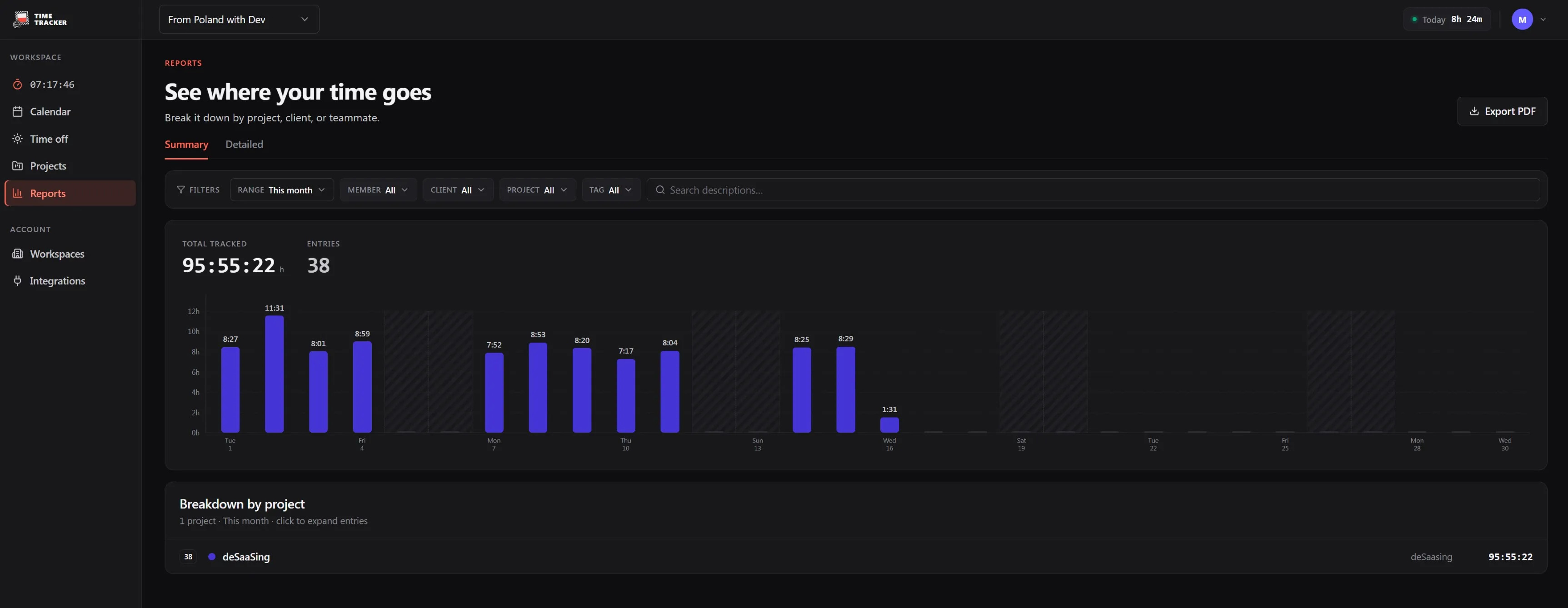
to build our own internal system, against a 300 to 500 hour estimate by the same team
Lead AI Engineer approves and commits every pull request. No agent commits to production
…and more. Tell us which one sounds like you. Let's talk!



We offer flexible payment options: fixed price, time & materials, dedicated team or on-demand, so you can pick the setup that fits your project and workflow best.
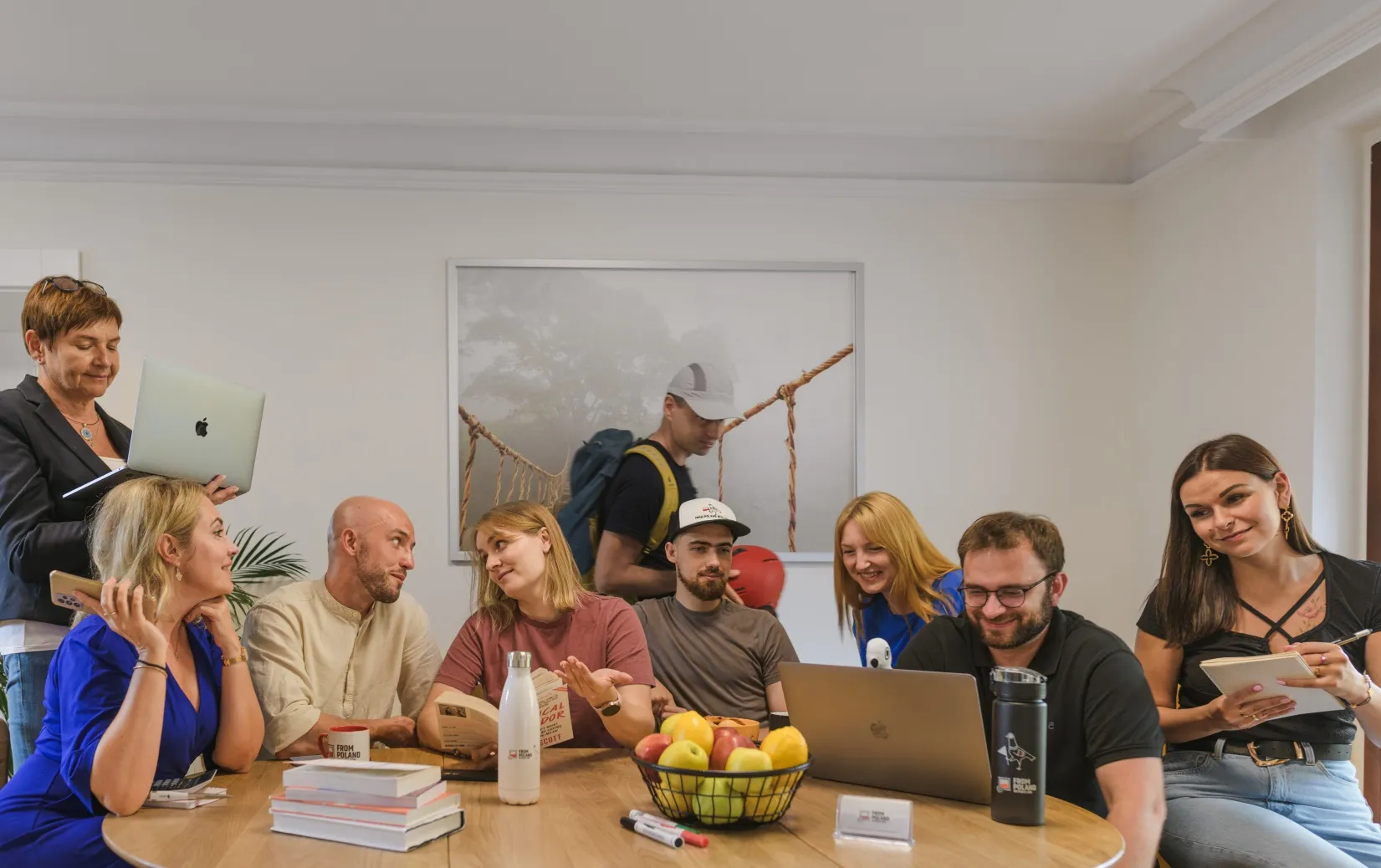
Our software agency was established in 2015 by two cousins, Paweł and Marcin. What started out as a team of 5 quickly scaled to 100+ people across technologies and locations on a mission to shift the mentality of outsourcing tactical projects to Polish devs. We handpick clients and projects, which enables our team to create, design and implement complex solutions and softwares.
We're the brains and the heart behind the code. A quirky bunch of passionate pros who love turning ideas into reality. Here, every project is a team sport, and we’re all about building software - and relationships - that last.

Mariusz

Adam

Konrad

Jan

Aleksander

Piotr

Bartosz
awesome engineers
Quality is our specialty, retention is our metric
















Got a question or need project advice? Reach out, we’d love to hear from you! Better yet, visit us at one of our offices or anywhere in Poland.
If you have a question about our AI-Native Engineering Services, you’ll probably find an answer below. If not, feel free to contact us – we’ll be happy to clear things up for you.
It is a way of building software rather than a type of software. Agents write, simplify and review code inside a workflow our Senior Engineers configured, with an independent review stage on the whole change and a Lead AI Engineer who approves and commits every pull request. The method is what changed. The standards did not.
Frequently, yes, and the objection is a fair one. Most of what ships as AI-assisted development is a single pass with no adversarial review, and it accumulates duplicated logic. Agentic Engineering is different. Our loop includes a simplifying stage whose only job is to reuse logic that already exists rather than let copies pile up, then a reviewing stage, then an independent reviewer on the whole change, then a person. The output is reviewed more times than hand-written code usually is.
Our Agentic Workflow is designed and built by Senior Engineers with years of hands-on experience. Optimized boilerplate and scaffolding. Review loops rather than a pass, so findings go back to be fixed and reassigned until there is nothing left to send. Lead AI Engineer who approves the pull request and commits to production. None of this is the same activity as someone building a tool over a weekend with an AI assistant. Same technology, different discipline.
A lot of people have, and it usually failed the same way: months of specification, a long silence, then software that did not match what you asked at the start. A 4 - 8 week build doesn't have room for that failure. You see working software early enough that being wrong about something is cheap to fix.
The pipeline consumes a spec; it does not invent one. That is why feasibility and scoping is a person doing process mapping with your team, not a form submit.
A working prototype can be quick. A production tool with real data, real permissions, real integrations depends on scope, data quality and security requirements. Our target range is 4 to 8 weeks.
For calibration: our own time tracker took 80 hours end to end, because it was a well-understood replacement with our own data and no politics.
Most client projects are larger, but you get a real timeline out of feasibility and scoping, before you commit to anything. If we can't give you one, we'll tell you what's blocking it rather than pick a number.
In most cases - yes. We can connect to systems that expose an API or a database: CRMs, spreadsheets, shared inboxes, document tools, internal systems, and third-party services where access is available. What decides feasibility usually isn't our side. It's whether the system you use will release its data, and on what terms.
That's exactly what feasibility and scoping is for. Integrations are where custom builds overrun, so we'd rather find the awkward one before you've committed than after.
Not perfect data. Nobody has that. What we do need to establish: where the data lives, how reliable it is, and the part that gets skipped - what the tool should do when a record is incomplete or contradicts itself. That last one is a business decision, not a technical one.
Only where it makes sense from a business perspective and it's your call, not ours.
Two different things get called AI here, and they're worth keeping apart. We use AI agents to build the software. That's why a build takes weeks rather than quarters, and it applies to every project. Whether the software itself has AI features is a separate decision made during scoping.
Where AI earns its place: an assistant trained on your own SOPs, policies, product documentation, sales material, support history or onboarding resources etc. The questions your team currently answers by asking the one person who knows.
Where it doesn't: most internal tools are better as ordinary, fast, predictable software. Our own time tracker contains no AI.